Cybersecurity Is Everyone's Responsibility
Strong cybersecurity depends on informed people, trusted and updated software, continuous security testing, and decisive credential recovery after an incident.
Cybersecurity is a shared responsibility#
Cybersecurity is often treated as the exclusive responsibility of information technology or security teams. That view is incomplete. Technical specialists design networks, configure defenses, monitor alerts, and investigate incidents, but every person who uses an account, handles a document, installs an application, or shares information can either strengthen or weaken those defenses.
A well-built network cannot compensate for every unsafe decision. An employee may reuse a password, approve an unexpected login request, send sensitive data to the wrong recipient, disable an update, or install untrusted software. None of these actions necessarily involves malicious intent. They often happen because people are under pressure, do not recognize the risk, or have never been shown a safer way to complete their work.
For that reason, cybersecurity education must reach beyond technical employees. People do not need to become security engineers, but they should understand how to use, store, share, and protect the data entrusted to them.
Security awareness should support better decisions#
Annual training and policy documents are useful only when they change everyday behavior. Effective education connects security requirements to situations employees actually face and gives them a clear action to take.
Every employee should know how to:
- Classify information and recognize personal, confidential, or operationally sensitive data.
- Store work data only in approved locations instead of personal email, consumer cloud storage, or unmanaged devices.
- Share information with the minimum necessary audience and verify recipients before sending it.
- Use a password manager, create unique credentials, and enable multifactor authentication wherever it is available.
- Recognize suspicious messages, links, attachments, login pages, and unexpected authentication prompts.
- Report a possible mistake or incident quickly without fear of blame.
Education should be continuous, role-based, and measurable. Finance teams may need more practice with payment fraud, developers with secrets and dependencies, and executives with impersonation and data-handling risks. Short exercises, realistic phishing simulations, onboarding guidance, and reminders placed inside normal workflows are usually more useful than a single generic presentation.
The goal is not to make employees afraid of technology. It is to create a culture in which pausing, verifying, and reporting are normal parts of work.
Pirated and outdated software can create an internal threat#
An insider threat is not always a dishonest employee. It can also be a legitimate user whose device or behavior gives an attacker a path into the organization. Pirated, unsupported, or outdated software makes that path more likely.
Pirated software cannot be trusted to match the vendor's original release. Installers, cracks, and license bypass tools may be modified to include malware, steal credentials, disable protective controls, or establish persistent remote access. Even when the software appears to work normally, the organization may have no reliable way to verify its integrity or receive security support.
Outdated software presents a different but related risk. Once a vulnerability becomes known, attackers can scan for systems that have not installed the available fix. Unsupported products are more dangerous because security patches may no longer be issued at all. CISA specifically advises users to install updates promptly because software flaws can provide access to files and accounts.
Organizations should manage this risk as an operational issue rather than relying on reminders alone:
- Maintain an inventory of approved hardware, operating systems, applications, browser extensions, and versions.
- Remove local administrator privileges where they are not required.
- Use application allowlisting or managed software catalogs to prevent unauthorized installation.
- Enable automatic updates where practical and define deadlines for critical security patches.
- Identify end-of-life products early and fund their replacement before vendor support ends.
- Provide a simple process for employees to request legitimate tools needed for their jobs.
- Isolate or remove devices that cannot meet the organization's security baseline.
These controls matter because data breaches are not always evidence that network architecture failed. A secure perimeter can still be bypassed through a compromised endpoint, stolen session, exposed credential, or employee mistake.
Security testing must continue after the first release#
Many security teams perform a penetration test shortly before an application launches and treat the result as a permanent certificate of safety. In reality, the tested application begins to change as soon as new features, integrations, permissions, infrastructure, and dependencies are introduced.
A test only describes the system within a particular scope and at a particular moment. A new function can create an authorization flaw. A revised API can expose more data than intended. A dependency update can introduce a known vulnerability. A cloud configuration change can make an internal service publicly reachable. None of these risks will be found by a report that is never revisited.
OWASP recommends integrating security tests into development and CI/CD workflows and using a balanced set of techniques. Continuous security testing does not mean running an intrusive full-scale penetration test against production after every small commit. It means matching the type and depth of testing to the risk of each change.
A practical program can combine:
- Threat modeling when a feature changes trust boundaries, sensitive data flows, or privileges.
- Peer review and secure coding checks during development.
- Automated dependency, secret, static, and dynamic scanning in the delivery pipeline.
- Targeted manual testing for new authentication, authorization, payment, upload, API, and administrative functions.
- Regression tests for previously fixed vulnerabilities so they do not return.
- Periodic independent penetration tests for the complete system and its real attack surface.
- Retesting after remediation to confirm that the fix is effective and did not create another weakness.
Release decisions should be based on documented risk. A passing scanner result alone is insufficient. Testing scope, evidence, unresolved findings, accepted risks, owners, and remediation deadlines should all be recorded.
Fixing a vulnerability is not the same as removing an attacker#
When an organization discovers that a system has been compromised, closing the original vulnerability is essential, but it may not be sufficient. The attacker may already have copied passwords, API keys, session tokens, private keys, certificates, recovery codes, or service-account credentials. If those credentials remain valid, the attacker may return through the front door even after the technical flaw has been patched.
Incident responders should determine what the affected system stored, processed, or could access. They should review logs and identity activity to establish the likely period of compromise, the attacker's privilege level, and the systems within the same trust boundary. Where credential exposure cannot be confidently ruled out, the safer assumption is that accessible secrets may be compromised.
Credential recovery should include the relevant actions below:
- Disable or contain affected accounts while the investigation is active.
- Reset user, administrator, service, database, and device credentials within the compromised trust boundary.
- Revoke active sessions, refresh tokens, remembered devices, application passwords, and recovery codes.
- Rotate API keys, signing keys, encryption keys, certificates, and other machine secrets that were accessible.
- Remove unauthorized accounts, keys, forwarding rules, OAuth grants, scheduled tasks, and persistence mechanisms.
- Require multifactor authentication and review whether existing MFA methods were also compromised.
- Reissue credentials with least privilege instead of recreating the previous level of access automatically.
- Monitor the replacement credentials and restored systems for renewed suspicious activity.
Rotation must be planned carefully so that services are not broken and old secrets are actually invalidated. NIST's current incident-response guidance also emphasizes verifying the integrity of restored assets and remediating root causes before returning them to production.
A resilient organization connects people, process, and technology#
Cybersecurity improves when responsibility is distributed but accountability remains clear. Leaders must fund supported tools and make safe behavior practical. Managers must reinforce policy and respond constructively to reports. Employees must protect the information they handle and speak up quickly. Developers and system owners must build security checks into every change. Security teams must test, monitor, investigate, and help the rest of the organization make better decisions.
A useful baseline is straightforward:
- Educate everyone according to the risks they encounter.
- Permit only trusted, licensed, supported, and updated software.
- Test security throughout development and after meaningful changes.
- Treat credentials and sessions as potentially compromised after an intrusion.
- Learn from incidents and improve controls, training, and response plans.
Cybersecurity is strongest when it is not a final technical checkpoint, but a routine part of how an organization handles data, chooses software, releases changes, and recovers from failure.
Continue exploring
Related articles

Cybersecurity
Siberaman at Super Garuda Shield 2024: Contributing to Its First Cyber Exercise
Siberaman contributed to the first Cyber Exercise in Super Garuda Shield history, supporting a multinational effort to test defensive readiness, secure communications, and cyber resilience.
Cybersecurity
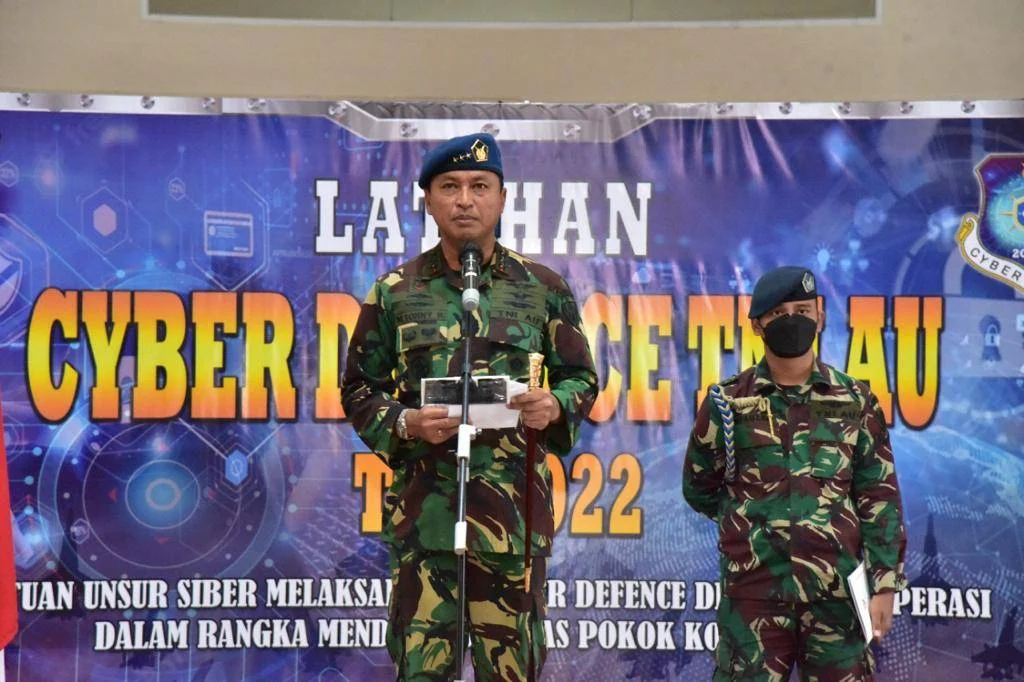
Siberaman at the Indonesian Air Force Cyber Defence Exercise 2022
Siberaman took part in the Indonesian Air Force Cyber Defence Exercise 2022, an important opportunity to strengthen practical readiness, professional competence, and collaboration against evolving digital threats.
Knowledge for a better understood world.

Cybersecurity
reNgine: Orchestrating Multiple Tools for Better Web Reconnaissance
reNgine turns a collection of specialized security tools into a configurable reconnaissance workflow, helping testers expand coverage, correlate results, and monitor changes without mistaking automation for proof.