reNgine: Orchestrating Multiple Tools for Better Web Reconnaissance
reNgine turns a collection of specialized security tools into a configurable reconnaissance workflow, helping testers expand coverage, correlate results, and monitor changes without mistaking automation for proof.
Web reconnaissance is a multi-tool problem#
Web security testing rarely depends on a single perfect scanner. A modern application may expose domains, subdomains, APIs, cloud services, open ports, archived endpoints, JavaScript routes, administrative panels, and third-party infrastructure. Each source reveals a different part of the attack surface, and each security tool makes different trade-offs between speed, depth, noise, and coverage.
This is why reNgine is an interesting open-source project. Rather than trying to replace every reconnaissance utility, reNgine acts as an orchestration and data-management layer around specialized tools. It provides configurable workflows, stores results in a database, correlates discoveries, and presents them through a web interface. For penetration testers, security teams, and bug bounty researchers, that can turn a folder full of disconnected command outputs into a repeatable process.
The project describes itself as a web application reconnaissance and vulnerability-scanning suite. Its value is not simply that it can launch commands. Its value is that it connects discovery stages so that the output of one task can become useful input for the next.
Why one scanner is not enough#
Two tools designed for the same task may still produce different results. A passive subdomain tool may rely on certificate transparency and public datasets, while an active tool may perform DNS brute forcing. A crawler may discover links from the live application, while an archive-based collector may find endpoints that are no longer linked but remain accessible. A template scanner may identify a known exposure, while a browser screenshot may reveal an unexpected login portal that deserves manual review.
Combining tools can therefore improve coverage through complementary methods:
- Multiple subdomain sources can reveal assets missed by any single provider.
- HTTP probing separates responsive services from stale DNS records.
- Port scanning finds services that do not appear in normal browser navigation.
- Crawlers and historical URL collectors expose different endpoint populations.
- Directory fuzzing tests likely paths that links and archives may never reveal.
- Screenshots make large groups of hosts easier to triage visually.
- Vulnerability scanners test known patterns across the assets already discovered.
More tools do not automatically mean more accuracy. They can also create duplicate records, false positives, inconsistent naming, rate-limit problems, and a large review queue. The real objective is controlled diversity: use tools with distinct strengths, normalize their output, remove obvious duplication, and preserve enough evidence for a human to verify important findings.
What reNgine brings to the workflow#
reNgine provides highly configurable scan engines defined in YAML. The official documentation describes tasks for subdomain discovery, HTTP crawling, port scanning, OSINT, directory and file fuzzing, endpoint gathering, WAF detection, screenshots, and vulnerability scanning. A scan engine includes only the tasks declared in its configuration, allowing a team to create different workflows for different purposes.
A passive reconnaissance engine, for example, can emphasize public sources and conservative request rates. A deeper authorized assessment can add active enumeration, port scanning, content discovery, and vulnerability templates. A monitoring engine can run on a schedule and focus on detecting new subdomains, endpoints, or findings.
The platform also contributes capabilities that individual command-line tools do not usually share:
- Database-backed storage and correlation of reconnaissance data.
- Projects that separate targets, results, and dashboards for different engagements.
- Immediate scans, periodic schedules, and clock-based schedules.
- Subscans that let a tester investigate one interesting discovery without rerunning the full pipeline.
- Filtering and query features for large result sets.
- Change detection for newly discovered or removed assets.
- Role-based access for administrators, penetration testers, and auditors.
- Notifications and customizable reports.
These features make reNgine a useful operating environment for reconnaissance instead of a basic tool launcher.
The importance of external-tool integration#
Security workflows evolve quickly. New data sources appear, APIs change, and a specialized tool may perform better for a particular target or organization. A rigid platform becomes less useful when its built-in tools are the only options.
reNgine's Tools Arsenal addresses this problem by allowing external tools to be registered, installed from GitHub or through Go, updated, and referenced by scan engines. The current documentation provides detailed support for adding custom subdomain-enumeration tools. Administrators can define installation and update commands, version detection, and the command template used to pass a target and output file.
This design has several advantages:
- Teams can adopt a useful new tool without waiting for it to become a default dependency.
- An internal discovery utility can participate in the same workflow as public tools.
- Installation and update information is recorded in one managed location.
- Scan engines remain readable because they refer to tools by configured names.
- Results can enter the same downstream correlation and review process.
Extensibility must be handled carefully. An installation command or third-party repository is executable code. Adding a tool means trusting its source, dependencies, update mechanism, and output format. A security team should review and pin versions where possible, test updates in an isolated environment, and avoid giving the scanning platform unnecessary credentials or network access.
A practical reconnaissance pipeline#
A useful reNgine workflow can be understood as a sequence of narrowing and enrichment.
First, define the authorized scope. Record the root domains, explicitly permitted subdomains or IP ranges, and exclusions. The scope should come from a signed penetration-testing agreement, an internal authorization, or the published rules of a bug bounty program.
Next, gather candidate assets using complementary passive sources and any approved active enumeration. Normalize and deduplicate the names, resolve them, and identify responsive HTTP services. Then enrich those assets with technologies, status codes, titles, IP addresses, open ports, WAF information, and screenshots.
After the attack surface is understood, collect endpoints through crawling and historical sources. Apply targeted directory discovery and patterns for potentially interesting parameters or file types. Vulnerability scanning should come later, against the confirmed in-scope assets and with rates appropriate to the environment.
Finally, validate and prioritize the results. A high-severity template match is a lead, not a completed finding. Reproduce it safely, determine whether the behavior is exploitable, identify the affected asset and data, capture evidence, and rule out environmental or template-related false positives.
Configuration matters more than the number of tools#
The same pipeline can be safe and useful in one configuration but disruptive in another. Thread counts, timeouts, retries, rate limits, wordlists, port ranges, recursive depth, and redirect behavior all influence load and results. reNgine exposes many of these settings through its YAML scan engines.
Good configuration starts with the objective:
- Use passive sources when the target cannot tolerate active traffic.
- Set conservative concurrency and rate limits for production systems.
- Exclude third-party infrastructure and out-of-scope subdomains explicitly.
- Choose port lists and wordlists according to the engagement rather than always selecting the largest option.
- Use authenticated headers only when formally authorized and protect those credentials as secrets.
- Select vulnerability templates relevant to the technologies and risk being assessed.
- Separate lightweight continuous monitoring from deeper scheduled assessments.
Running every available tool with maximum intensity may increase scan time and operational risk while burying the useful discoveries in noise. A smaller, purpose-built engine is often more effective.
Correlation makes raw output actionable#
Individual tools commonly produce text, JSON, or CSV files. Those formats are useful for automation, but a large assessment can quickly create thousands of records across many directories. The analyst then spends time joining hostnames, IP addresses, ports, URLs, screenshots, and findings manually.
reNgine's database and interface help connect those observations. A tester can move from a subdomain to its endpoints and findings, filter assets by properties such as status or name, and compare changes across scans. Smart duplicate removal can reduce repeated endpoints using characteristics such as page title and content length.
Correlation also supports better prioritization. An unfamiliar subdomain becomes more interesting when it exposes an administrative title, an uncommon port, an outdated technology, and a matching vulnerability signal. None of those observations alone proves a vulnerability, but together they provide a stronger reason for manual investigation.
Automation has important limits#
reNgine can improve repeatability and visibility, but it does not replace a penetration tester. Automated reconnaissance is strongest at breadth: collecting assets, applying repeatable checks, and highlighting changes. Human analysis is still required for business logic, complex authorization, chained weaknesses, contextual impact, and safe exploitation decisions.
Teams should account for several limitations:
- Coverage depends on the quality, configuration, and availability of the underlying tools and data sources.
- A successful scan does not prove that every asset or vulnerability was found.
- A scanner finding does not prove exploitability or business impact.
- External APIs may require credentials, impose quotas, or return incomplete data.
- Scheduled scanning can create unexpected load if scope and rate limits are not controlled.
- Stored reconnaissance data may itself be sensitive and needs access control, backups, retention rules, and monitoring.
- Generated vulnerability descriptions or LLM-assisted suggestions require human verification and must not receive secrets unnecessarily.
A mature process measures the number of findings alongside false-positive rates, validation time, asset coverage, scan failures, change-detection value, and the remediation outcomes that follow.
Use reNgine legally and safely#
Reconnaissance and vulnerability scanning can affect real systems. Even apparently harmless enumeration may violate policy, trigger defenses, consume resources, or touch infrastructure owned by another party. reNgine should only be used against assets for which the operator has explicit permission.
Before a scan, document the scope, schedule, source IP addresses, allowed techniques, prohibited actions, data-handling rules, emergency contacts, and stop conditions. Start conservatively, observe the target's behavior, and expand only when the engagement permits it. Protect the reNgine instance as a sensitive security system because it contains target inventories, findings, credentials or headers used for authenticated scans, and information valuable to an attacker.
A platform for repeatable reconnaissance#
reNgine is compelling because it recognizes a practical truth: accurate security understanding is assembled from multiple imperfect observations. Specialized tools are still essential, but their value increases when they are placed in a controlled pipeline, correlated in a common data model, scheduled consistently, and presented for human review.
For small teams, it can reduce the manual effort required to coordinate routine reconnaissance. For larger teams, it can provide shared engines, project separation, roles, monitoring, and a common view of the attack surface. Its external-tool support also gives the workflow room to evolve.
The best use of reNgine is not to run every tool and trust every alert. It is to build a deliberate reconnaissance process: choose complementary tools, configure them for the scope, protect the platform, validate the evidence, and turn repeatable discovery into better security decisions.
Continue exploring
Related articles
Cybersecurity
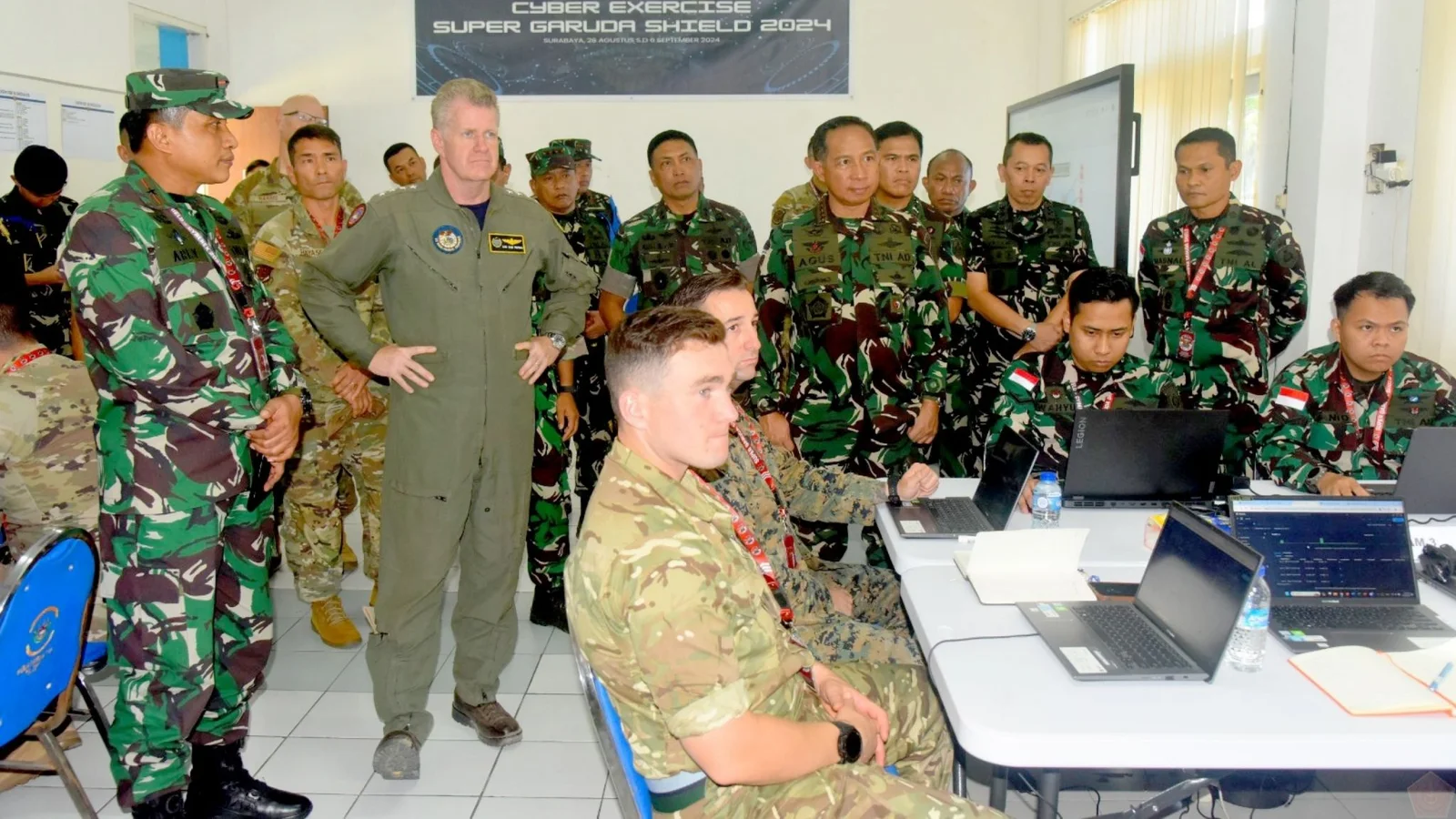
Siberaman at Super Garuda Shield 2024: Contributing to Its First Cyber Exercise
Siberaman contributed to the first Cyber Exercise in Super Garuda Shield history, supporting a multinational effort to test defensive readiness, secure communications, and cyber resilience.
Cybersecurity
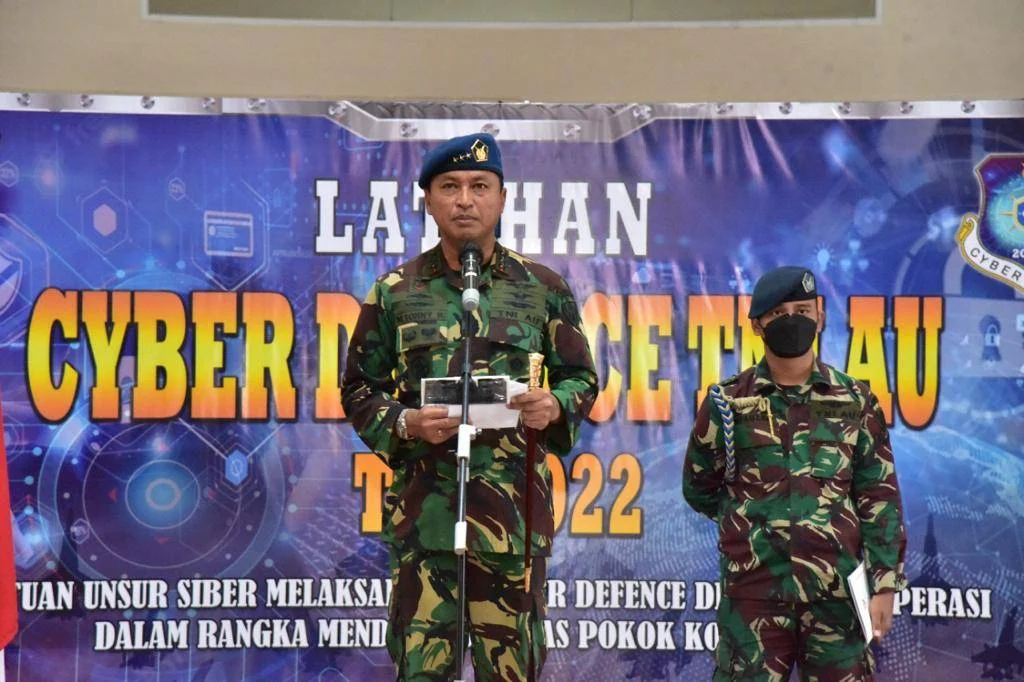
Siberaman at the Indonesian Air Force Cyber Defence Exercise 2022
Siberaman took part in the Indonesian Air Force Cyber Defence Exercise 2022, an important opportunity to strengthen practical readiness, professional competence, and collaboration against evolving digital threats.
Knowledge for a better understood world.

Cybersecurity
Cybersecurity Is Everyone's Responsibility
Strong cybersecurity depends on informed people, trusted and updated software, continuous security testing, and decisive credential recovery after an incident.