Siberaman at the Indonesian Air Force Cyber Defence Exercise 2022
Siberaman took part in the Indonesian Air Force Cyber Defence Exercise 2022, an important opportunity to strengthen practical readiness, professional competence, and collaboration against evolving digital threats.
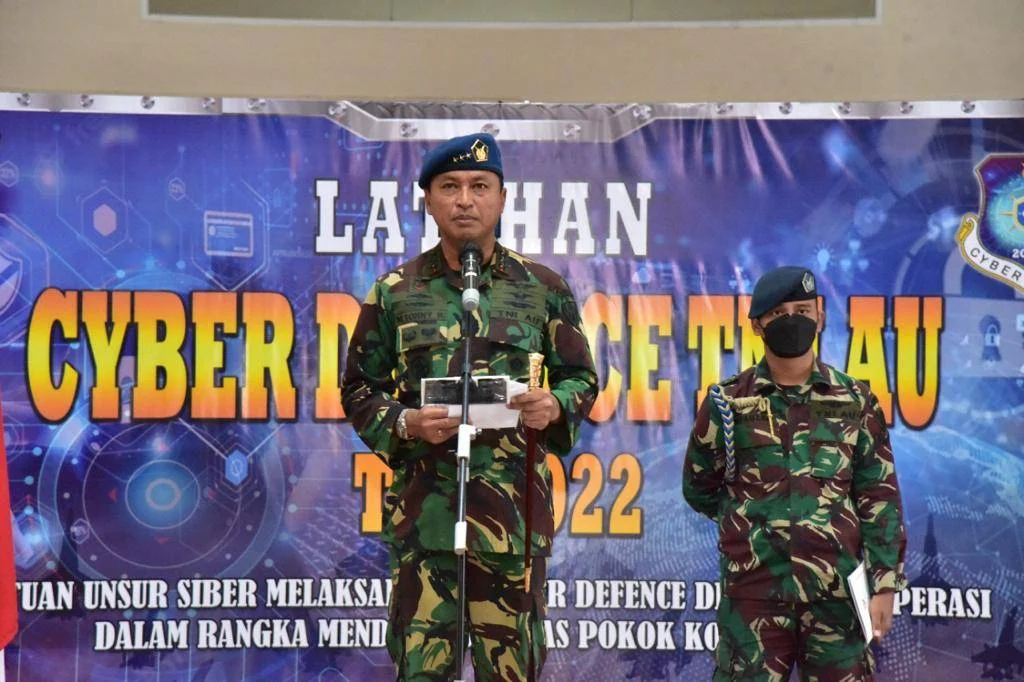
Building cyber readiness through realistic exercise#
Siberaman took part in the Indonesian Air Force Cyber Defence Exercise for Fiscal Year 2022. The exercise provided an important environment for developing practical cyber-defense competence and reinforcing the habits that teams need when digital systems are placed under pressure.
Indonesia Defense reported that Air Marshal Tonny Harjono, then Commander of the Indonesian Air Force Doctrine, Education and Training Development Command (Dankodiklatau), formally closed the exercise at the Air Force Command and Staff School (Sekkau), Halim Perdanakusuma, East Jakarta, on 3 November 2022. The report was published the following day and described the exercise as an initial foundation for improving competence in preparation for future Indonesian Air Force duties.
For Siberaman, participation provided an opportunity to contribute cybersecurity knowledge in a disciplined training setting while learning from the people, procedures, and operational perspective of the Indonesian Air Force. Cyber readiness cannot be established through policy documents alone. It must be practiced, evaluated, and improved continuously.
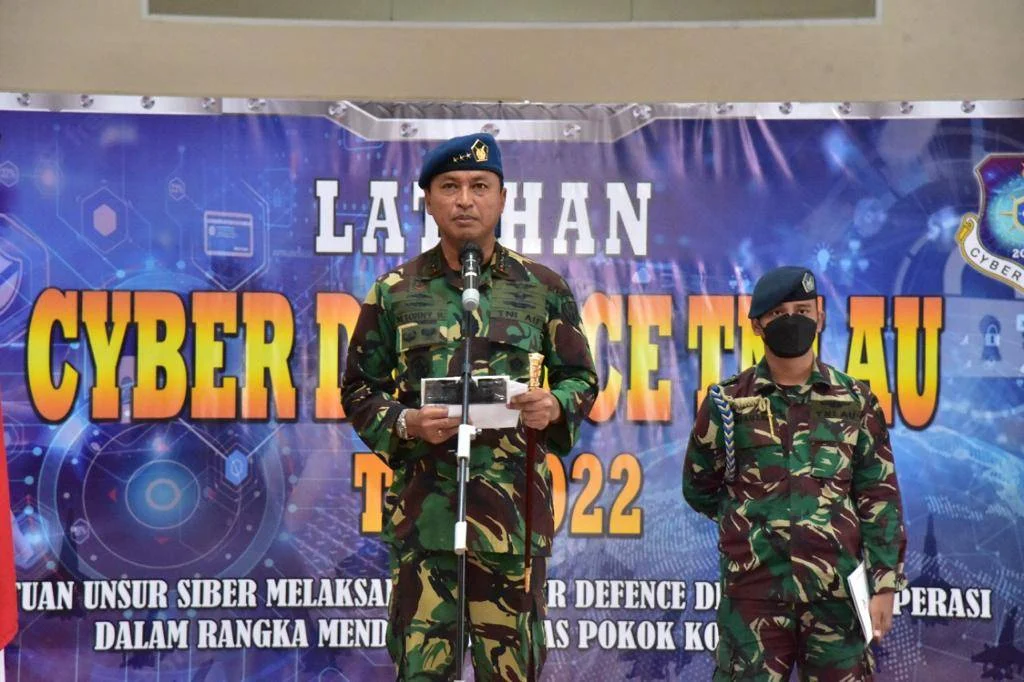
*Photo source: Indonesia Defense.*
Why cyber defence matters to air operations#
Modern air operations depend on computer systems and networks for communication, planning, coordination, logistics, situational awareness, administration, and decision-making. As those dependencies grow, digital disruption can have consequences far beyond an individual device or application.
Cyber defence therefore supports operational continuity. Its purpose is not limited to preventing a website from being defaced or removing malware from a workstation. A capable defensive team must be able to protect information, maintain trusted communications, recognize abnormal behavior, contain an incident, recover essential services, and explain the operational impact to decision-makers.
The exercise took place in a period of rapid technological change. Connected services were becoming more important across public institutions, while threat actors were increasingly combining social engineering, stolen credentials, vulnerable software, and weaknesses in trusted relationships. Training against these realities helps participants understand that security depends on people, processes, and technology rather than a single product.
Competence is developed through repetition#
A cyber exercise creates a safe and authorized setting in which participants can turn knowledge into action. Procedures that appear clear on paper often reveal gaps when a scenario begins: responsibilities may overlap, evidence may be incomplete, escalation may be slow, or a technically correct response may create an unexpected operational problem.
Practice allows teams to identify those weaknesses before a real incident. A useful exercise can strengthen abilities such as:
- Recognizing indicators of suspicious activity and separating them from normal operational noise.
- Preserving evidence while containing affected systems.
- Communicating technical findings clearly to commanders and non-technical stakeholders.
- Coordinating analysts, system owners, network defenders, and leadership under time pressure.
- Prioritizing essential services when every issue cannot be addressed at once.
- Restoring systems carefully and verifying that the original threat has been removed.
- Documenting lessons and turning them into improved controls, procedures, and future scenarios.
Repetition matters because technology, personnel, and threats keep changing. A successful exercise is not a permanent certificate of readiness. It is a measurement of capability at a particular moment and a starting point for the next improvement cycle.
Collaboration is a defensive capability#
Cyber incidents rarely remain inside one technical team. They may affect operations, legal responsibilities, public communication, personnel, suppliers, and partner institutions. Defenders therefore need both technical skill and the ability to cooperate across organizational boundaries.
Siberaman's presence in the TNI AU Cyber Defence Exercise highlighted the value of bringing different perspectives into one training environment. Security specialists may see network traffic, identity activity, or application behavior, while operational personnel understand which services are mission-critical and which defensive actions are practical. Neither perspective is complete by itself.
Collaboration becomes especially important when information is uncertain. Teams need a shared vocabulary, clear reporting channels, agreed authority, and the confidence to state what is known, what is only suspected, and what evidence is still required. These habits reduce confusion and make technical response more useful to the wider mission.
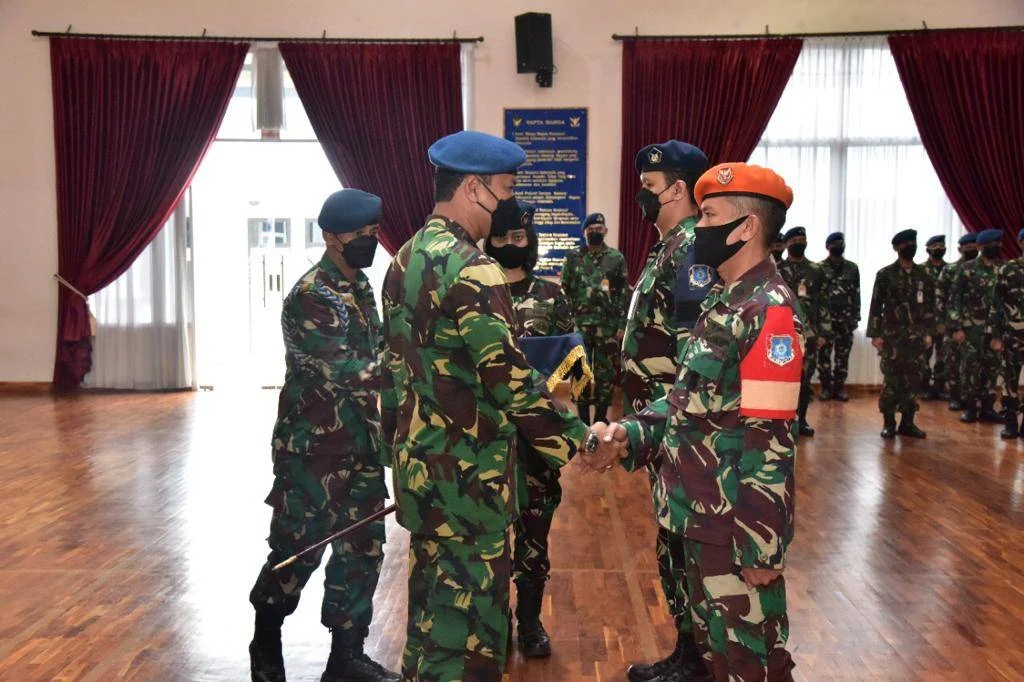
*Photo source: Indonesia Defense.*
From exercise findings to lasting improvement#
The most valuable output of a cyber exercise is not the scenario score. It is the set of improvements made afterward. Observations should be converted into accountable actions, with owners and realistic deadlines.
That follow-through may include updating incident-response playbooks, clarifying escalation paths, improving asset inventories, strengthening identity controls, patching exposed systems, protecting credentials, expanding monitoring coverage, or designing targeted training for recurring human errors. Findings should also influence the next exercise so that teams can verify whether earlier weaknesses were actually resolved.
Security exercises must be communicated responsibly. Public reporting can recognize participation and demonstrate a commitment to readiness, but operationally sensitive details should remain protected. This article therefore focuses on the purpose and lessons of the activity without describing restricted systems, configurations, vulnerabilities, defensive procedures, or scenario-specific intelligence.
A foundation for future capability#
At the closing of the 2022 exercise, Air Marshal Tonny Harjono emphasized that air-domain duties would continue to develop alongside advances in computer- and network-based technology. That observation remains central to cyber defence: every new digital capability can improve speed and effectiveness, but it also creates responsibilities for secure design, monitoring, maintenance, and recovery.
Siberaman is proud to have been part of this Indonesian Air Force Cyber Defence Exercise. The experience strengthened our appreciation for disciplined preparation, practical testing, and cooperation between technical and operational communities.
Readiness is built before an incident occurs through education, secure engineering, realistic exercises, honest evaluation, and the willingness to keep improving after the exercise has ended.
Continue exploring
Related articles
Cybersecurity
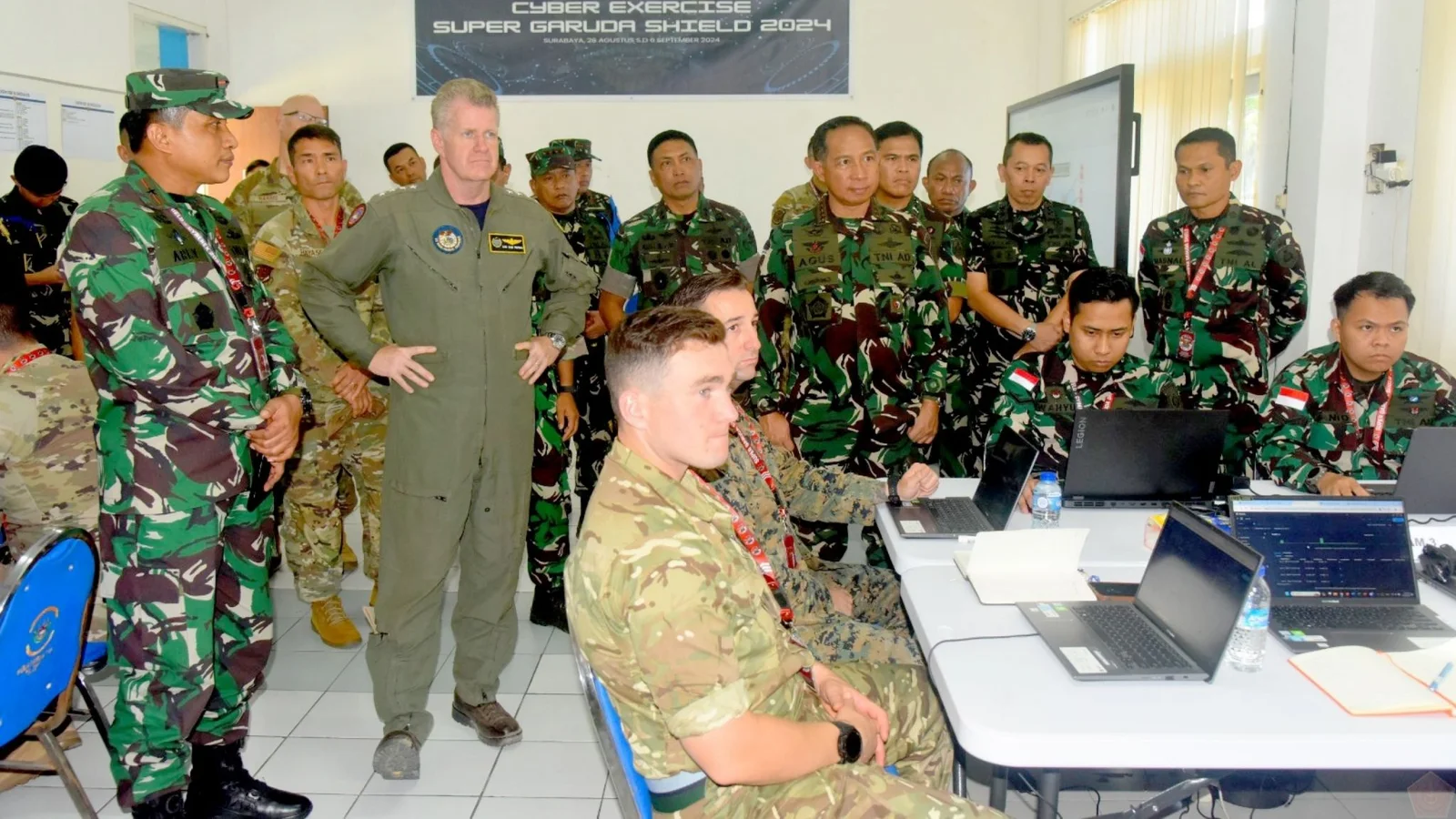
Siberaman at Super Garuda Shield 2024: Contributing to Its First Cyber Exercise
Siberaman contributed to the first Cyber Exercise in Super Garuda Shield history, supporting a multinational effort to test defensive readiness, secure communications, and cyber resilience.
Knowledge for a better understood world.

Cybersecurity
reNgine: Orchestrating Multiple Tools for Better Web Reconnaissance
reNgine turns a collection of specialized security tools into a configurable reconnaissance workflow, helping testers expand coverage, correlate results, and monitor changes without mistaking automation for proof.
Knowledge for a better understood world.
Cybersecurity
Cybersecurity Is Everyone's Responsibility
Strong cybersecurity depends on informed people, trusted and updated software, continuous security testing, and decisive credential recovery after an incident.