One Pandemic, Too Many Apps: Indonesia Needs an Integrated COVID-19 Platform
Indonesia's early pandemic response shows why citizens need one coherent digital gateway connecting national and regional COVID-19 services without sacrificing privacy or local responsibility.
One public-health emergency, many digital doors#
Indonesia has responded to COVID-19 with remarkable speed, including through digital services. Yet the speed of development has also produced a fragmented experience. Different ministries and regional governments have created applications for different jurisdictions and purposes: PIKOBAR serves West Java, JAKI serves Jakarta, eHAC is managed by the Ministry of Health for health-alert information connected to travel, and PeduliLindungi has been established by the Ministry of Communication and Information Technology as a national contact-tracing and public-health application.
Each application may solve a legitimate problem. Regional governments need local information, hospitals need operational data, health authorities need travel declarations, and national agencies need tools that work across provincial borders. The problem is not that government institutions are innovating. The problem is that citizens experience those institutional boundaries as repeated forms, separate accounts, overlapping permissions, and applications that do not always communicate with one another.
During a pandemic, the public should not have to understand the government's organizational chart before receiving a service.
A short journey can become a long digital process#
I often travel between nearby cities. The geographic distance may be short, but the digital journey can feel much longer. For a flight, I may need to complete eHAC. Before entering a particular jurisdiction, I may need a separate travel permit or local registration. PeduliLindungi may be required for contact tracing, while a provincial or municipal application provides the information or reporting process expected at my destination.
The result is an exhausting sequence: find the correct application, install it, create another account, submit similar identity and health information again, learn a different interface, and keep several applications active on one phone. Requirements can also change faster than citizens can understand them. A person who is already worried about health, work, and travel should not face unnecessary administrative uncertainty.
This inconvenience can also undermine public-health goals. People may submit inconsistent data, abandon a process, use an unofficial workaround, or arrive without the correct document. Officers in the field may have to check several formats manually. Every additional database and login also creates another system that must be secured, maintained, updated, and eventually retired.
Integration and institutional synergy are essential#
A national emergency demands coordination among ministries, provincial and municipal governments, health facilities, transportation operators, emergency services, and social-assistance agencies. Their responsibilities do not need to become identical, but their digital services should operate as parts of one public system.
Indonesia needs a shared COVID-19 platform that gives citizens one coherent point of access. This could be delivered as a super app, a mobile-friendly website, and assisted service channels for people who do not own smartphones. Behind that interface, authorized institutions could continue to operate their own systems while exchanging only the data required through common standards and secure interfaces.
This distinction is important. Integration does not have to mean placing every record in one enormous database or giving every agency unrestricted access. A single citizen experience can sit above a federated architecture in which data remains with the responsible institution, permissions are limited, and exchanges are logged. The objective is one journey for the public, clear ownership for government, and interoperable services for both.
What an integrated platform should provide#
The platform should begin with the tasks people urgently need rather than with the structure of the agencies delivering them. Useful capabilities could include:
- Contact tracing and exposure notifications.
- Applications and verification for travel permits.
- A single health declaration for air, sea, rail, and road travel where required.
- COVID-19 testing registration and access to verified results.
- Hospital locations, referral information, and bed availability.
- Requests and distribution monitoring for medicine, protective equipment, oxygen, and other medical supplies.
- Channels for medical assistance, teleconsultation, emergency support, and self-isolation guidance.
- Registration and transparent status tracking for social assistance.
- Official local and national case information presented in a consistent format.
- A future vaccination record and appointment service when safe and approved vaccines become available.
Citizens should enter the same information only once when there is a lawful reason to reuse it. A change of address or telephone number should not require separate updates in several applications. Eligibility decisions should be explainable, and a person should be able to correct inaccurate data or appeal an automated outcome.
Local features can still appear according to the user's location. Someone in West Java could receive PIKOBAR services inside the same gateway, while a Jakarta resident could access relevant JAKI services. The national platform would provide common identity, consent, notification, and interoperability components instead of erasing useful regional innovation.
Better integration can reduce fraud and errors#
Fragmented systems make it easier for records to be duplicated and harder for institutions to verify whether assistance has reached the intended person. A carefully designed integrated platform could reduce some forms of fraud through consistent identity verification, deduplication, eligibility checks, auditable transactions, and reconciliation between agencies.
For example, the same verified record could prevent one person from receiving a limited benefit multiple times under slightly different submissions. Stock requests could be compared with distribution and consumption records. Travel documents could be verified electronically instead of relying only on screenshots or paper. Assistance recipients could see the status of a request, reducing opportunities for unofficial intermediaries to demand payment.
Technology, however, does not automatically create integrity. Concentrated access can enable larger abuse if oversight is weak. Anti-fraud controls therefore need separation of duties, tamper-evident logs, independent audits, public reporting, complaint channels, and meaningful penalties for misuse. The system must also avoid excluding people whose identity records are incomplete or whose internet access is unreliable.
Contact tracing must earn public trust#
Contact tracing is one of the most sensitive functions because it can involve proximity, health, identity, and location information. The public-health value is real, but adoption will remain limited if people believe they are being placed under permanent surveillance.
The feature should therefore be designed around privacy and user control:
- Collect the minimum data necessary for a clearly stated public-health purpose.
- Prefer privacy-preserving proximity techniques over continuous collection of precise location when possible.
- Make participation and data sharing understandable rather than hiding consent inside long terms and conditions.
- Allow users to pause or disable tracing easily, subject to transparent and lawful requirements.
- Define short retention periods and delete data when it is no longer required.
- Encrypt information, restrict institutional access, and record every sensitive access.
- Publish the rules, architecture, security assessments, and a clear date or condition for ending the emergency function.
The World Health Organization has warned that digital proximity-tracking technologies raise ethical and privacy concerns. Trust is not an obstacle to public health; it is part of the infrastructure that makes public-health technology usable.
Defaults, reference points, and status quo bias#
People often treat the current or default option as a reference point and prefer to keep what they already have. Behavioral economics describes this tendency as status quo bias. It can influence adoption: a tracing feature that is easy to activate and remains convenient may continue to be used, while a feature that demands repeated effort may quickly be abandoned.
Government should not exploit this tendency through deceptive design or make privacy settings difficult to find. Instead, the platform should make the beneficial choice clear, useful, and reversible. People are more likely to keep a voluntary feature enabled when it gives them a direct advantage, such as timely exposure alerts, easier travel verification, or faster access to care. They also need confidence that they can turn it off without punishment.
A good default can support public welfare, but the user must understand what is happening. The platform should explain what data is collected, what benefit it provides, who can access it, how long it remains, and how to change the choice. Informed confidence is more sustainable than forced compliance.
One platform still needs strong governance#
A super app would simplify the public experience, but it would also become critical national infrastructure. A failure, cyberattack, or misuse could affect millions of people. Integration must therefore be accompanied by governance from the beginning:
- Clear legal authority and purpose limitations for every data exchange.
- A published division of responsibility among ministries and regional governments.
- Strong authentication for officials and least-privilege access to sensitive records.
- Security testing before release and after every significant change.
- Independent privacy, security, accessibility, and human-rights reviews.
- Open technical standards that prevent dependence on one vendor.
- Offline and assisted alternatives so that essential services never depend entirely on a smartphone.
- A recovery plan, public incident-notification process, and accountable leadership.
Success should not be measured by download numbers alone. The meaningful measures are whether people receive help faster, submit less duplicate information, understand the rules, trust the system, and experience fewer errors and unfair exclusions.
Digital gotong royong#
Indonesia's tradition of gotong royong is built on shared effort: different people contribute according to their ability toward a common need. Government technology during this pandemic should embody the same spirit. Ministries, regional governments, hospitals, communities, and citizens do not need to surrender their distinct roles. They need to make those roles work together.
An integrated COVID-19 platform could improve efficiency today, but its larger value would be the institutional habit it leaves behind. Common standards, shared services, respectful data exchange, and collaboration across jurisdictions could strengthen future responses to disasters, health emergencies, and social needs.
One application will not solve the pandemic. It can, however, replace a confusing collection of digital doors with a coordinated public service and show that Indonesia can build quickly and work together during a crisis.
Continue exploring
Related articles
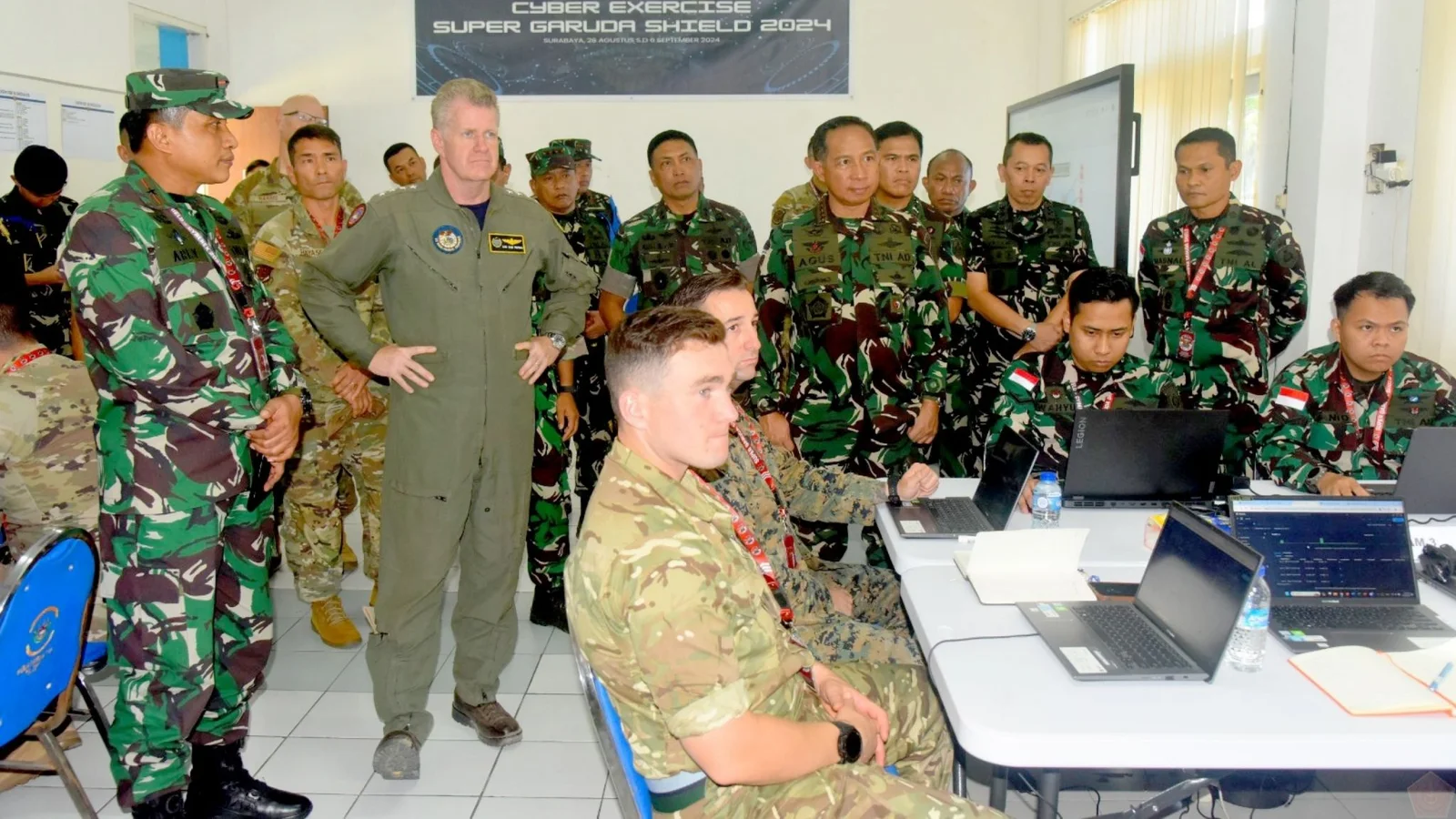
Cybersecurity
Siberaman at Super Garuda Shield 2024: Contributing to Its First Cyber Exercise
Siberaman contributed to the first Cyber Exercise in Super Garuda Shield history, supporting a multinational effort to test defensive readiness, secure communications, and cyber resilience.
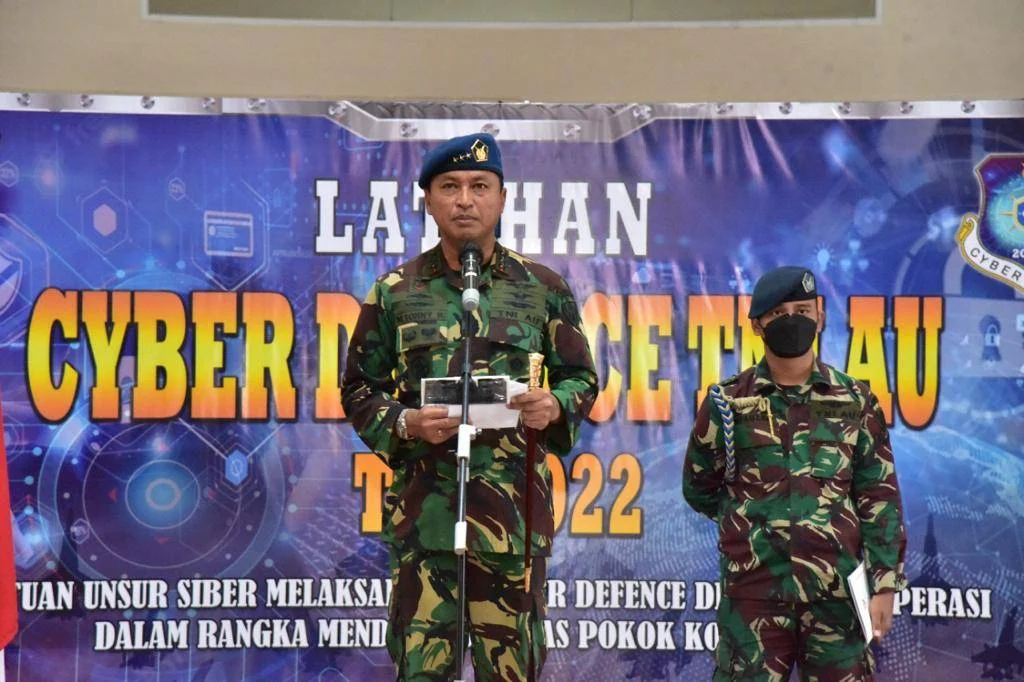
Cybersecurity
Siberaman at the Indonesian Air Force Cyber Defence Exercise 2022
Siberaman took part in the Indonesian Air Force Cyber Defence Exercise 2022, an important opportunity to strengthen practical readiness, professional competence, and collaboration against evolving digital threats.
Knowledge for a better understood world.

Cybersecurity
reNgine: Orchestrating Multiple Tools for Better Web Reconnaissance
reNgine turns a collection of specialized security tools into a configurable reconnaissance workflow, helping testers expand coverage, correlate results, and monitor changes without mistaking automation for proof.